
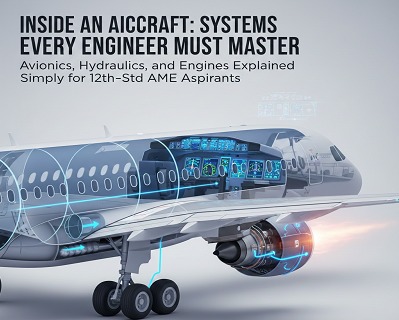
When we see an aircraft flying high in the sky, it looks like a smooth and magical experience. But behind that magic is a world of engineering, technology, and smart systems working together. If you dream of becoming an Aircraft Maintenance Engineer (AME), understanding these systems is the first step toward your aviation journey.
1. Avionics The Digital Brain of the Aircraft
Avionics refers to all the electronic systems that help pilots fly safely.
What’s included in Avionics?
Communication radios (used to talk with Air Traffic Control)
Navigation systems (help the pilot know where the aircraft is)
Cockpit display screens (show speed, altitude, engine health, etc.)
Autopilot (helps the pilot control the aircraft automatically)
Why is it important for AMEs?
As an AME, you’ll learn how to check, test, and troubleshoot these electronic systems because even a small error can affect flight safety.
2. Engine System The Heart That Keeps the Aircraft Alive
An aircraft engine is extremely powerful and helps the aircraft take off, move forward, and stay in the air.
What does the engine system do?
Produces thrust (the force that pushes the aircraft forward)
Maintains speed
Keeps the aircraft stable during flight
AME role:
Engine checks, temperature inspection, vibration monitoring, and overall health assessment of the engine.
3. Fuel System – The Energy Storage House
Just like vehicles, aircraft need fuel to operate. But in aircraft, the fuel system is more complex and intelligent.
What the fuel system does:
Stores fuel in tanks (usually in the wings)
Pumps fuel to the engine
Balances fuel between tanks for stability
AME responsibilities:
Ensuring fuel is clean, leak-free, and supplied smoothly.
4. Hydraulic System The Muscles of the Aircraft
Some parts of the aircraft are too heavy to move with simple force. This is where hydraulics come in.
Hydraulics help operate:
Landing gear
Brakes
Flaps on the wings
Steering on the ground
AME responsibilities:
Checking for leaks, fluid levels, and proper pressure.
5. Electrical System The Power House
Every light, screen, and electronic device inside an aircraft needs electricity. This system supplies that power.
It powers:
Cabin lights
Cockpit computers
Navigation instruments
Charging systems and emergency power
AME responsibilities:
Checking wires, batteries, connections, and electrical safety.
6. Environmental Control System Comfort and Safety in the Cabin
At high altitudes, the outside air is very cold and thin. But inside the aircraft, you feel comfortable. This is because of the Environmental Control System (ECS).
ECS maintains:
Proper cabin temperature
Right air pressure
Clean air circulation
AME responsibilities:
Inspecting air conditioning units, valves, ducts, and pressure control systems.
7. Landing Gear System The Legs of the Aircraft
The landing gear helps the aircraft take off, land, and move on the runway.
Landing gear includes:
Wheels
Tyres
Brakes
Shock absorbers
AME responsibilities:
Tyre checks, brake inspections, landing gear lubrication, and safety lock checks.
8. Flight Control System The Hands and Feet of the Aircraft
These are parts on the wings and tail that help the pilot control the aircraft.
Flight controls manage:
Turning left or right
Climbing up or descending
Reducing speed for landing
AME responsibilities:
Checking movement, alignment, hinges, and smooth operation of control surfaces.
9. Ice & Rain Protection System Weather Safety System
Aircraft often fly through icing conditions, rain, or fog. Ice on wings or sensors can be dangerous.
This system helps by:
Heating the wings
Clearing the windshield
Protecting sensors
AME responsibilities:
Ensuring all heating elements and protective systems work properly.
10. Safety & Warning Systems The Alert System
These systems warn pilots if something is wrong.
Examples include:
Fire warning
Smoke detection
Low fuel alerts
Collision avoidance systems
AME responsibilities:
Testing and maintaining these systems because they directly protect lives.
Conclusion
Understanding aircraft systems is the foundation of becoming a skilled Aircraft Maintenance Engineer. Even if you are a 12th-standard student, knowing the basics will help you start strong in your AME training.
Every system works together to make flying safe, smooth, and reliable and AMEs are the professionals who ensure these systems are always in perfect condition.